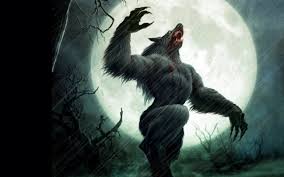
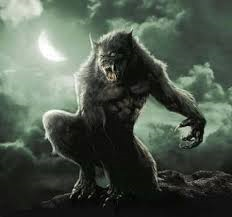
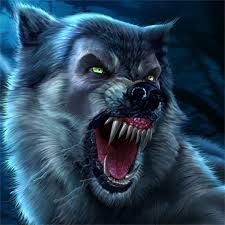
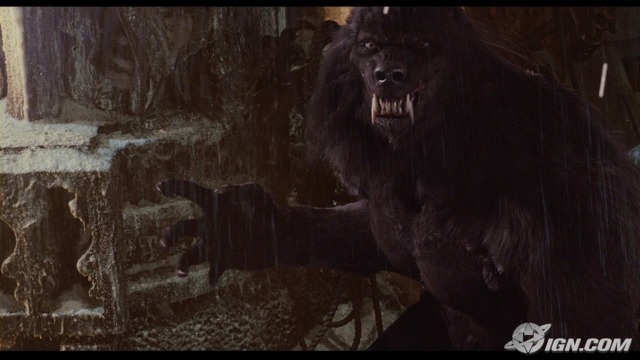
The book that I read was Werewolves. For centuries people use spells n other things to turn themselves into werewolf or werewolves ( if its more then one person ). Most of us are familiar with the idea of a werewolf - someone who can change, deliberately or unwillingly, into a ravenous creature - but is there justification for such a belief? And if so, how is it achieved - through magical potions or by the light of the full moon? Or is the whole thing simply delusion, the product of a disturbed mind? In Werewolves, Dr. Bob Curran examines the psychological roots of this profane linking of human and beast. Do the origins of such a belief lie in the supernatural world, or are there other explanations? How has the discovery of feral children shaped our ideas of human-beast? The author also considers the use of genetic engineering - in this case, the fusing of human and animal genes in order to cure human diseases and alleviate suffering. Is the idea of a man turning into really so far-fetched? Werewolves : is an essential reference book that takes an in - depth look at a fascinating subject. One word of warning, though: It must never be read under the baleful rays of a full moon. You must been warned! The first documented cases of Hypertrichosis was found in a man named Petrus Gonzales, the Wolf Boy, Living Werewolf or Dog-Faced Boy has been fixtures of the sideshow world for centuries. Werewolf, also known as lycanthropes, are legendary shape - shifting humans. The history of the werewolf legend has sprung up independently or spread to virtually every area of the Earth. Their other name, lycanthrope, may also be a hint at the origin of this myth. This book that I'm reading is called A Taste For Blood by: Fifteen Great Vampire Novellas Edited by: Martin H. Greenberg A Taste for Blood is testament to the long and illustrious history of one of fiction's most durable monster, the vampire. Spanning over a hundred years, the stories in A Taste for Blood place the vampire on a time scale which extends from the middle ages to an indeterminate future and follows an itinerary that includes New England, Europe, Africa,and the planet Venus. From J. Sheridan Le Fanu's "Carmilla," written in the early 18070's, twenty-five years before Bram Stroker's Dracula, to "Son of Celluliod," Clive Barker's dissection of an infinitely consumable world, A Taste for Blood presents more than a century of vampire fiction. The stories in this volume are written by some of the world's best known and most successful writers. H.P Lovecraft's " The Shunned House" may be one of the most original novellas ever written, combining the best elements of the vampire tale and haunted house story. Tanith Lee presents the vampire tale as a sympathetic charcater in "Bite-Me-Not, or Fleur de Fur," whose nefarious capabilities are nothing compared to the evil that men do. Another neat inversion of tradition is Robert Bloch's "The Yougoslaves" where the vampire emerges as both more worthy and more respectable than his human counterparts. Hugh B. Cave's 1933 "Murgunstrumm" was one of the first vampire tales story of its time. These are just a few of the delights to be found here. A Taste for Blood offers a sample of almost everything that has been achieved in vampire literature over the past century. One more thing however; it might be mistake to read these stories late at night. As the Introduction warns" mortals die and books crumble, the vampires lives." There is no more durable monster in all of horror fiction than the vampire. Through preceded into print by the ghost and superseded y many more vircerally imagined creatures in frightfulness the vampire continues to fascinate readers around the world almost 200 years after it debut. One need only see how the other classic monsters of supernatural fiction have have fared in recent years to appreciate the vampire's enduring achievement. The ghost has been reduced to an unthreatening symbol of the power of memory; the werewolf supplanted by the psychopath; and the mummy usurped y the zombie as a reminder that death may not be the end. The vampire, however, continues to flourish virtually untouched by time in an increasing number of short stories, bestselling novels, and popular films. But in fact these stories show something more. In their breadth magnitude, they reveal the secret of the vampire's literary immortality. the vampire tale began as a folk legend that, like all fork tales, was shaped to serve the needs of each community where it was cold. What those needs might have been was scarcely important to British and European writers of the nineteenth century when they began importing the vampire into their Gothic fiction. What mattered was that in this malignant creative they found a vehicle perfectly suit to carry their own cultures fear and dreads. They traditional image of the vampire with which must readers are familiar is that of Dracula, the bloodthirsty, Transylvanian count from Bram Stroker's 1897 novel. Like Dracula, the stories in A Taste For Blood are vampire- omitting here, embellishing there- to reflect the interests of the time and place in which it was written. Of all the stories included, J. Sheridan Le Fanu's " Carmilla " is perhaps the most traditional, and with good reason. Serialized between 1871 and 1872, " Carmilla " appeared in print twenty-five years before Dracula and made a strong impression on the young Bram Stroker's imagination. More important, though, is the sexual subcurrent that flows through the story. The reinterpretation of vampirism pioneered by Lovecraft became essential to the vampire story's survival in the years immediately following the Second Workld War, when the scientific sophistication of a readship familiar with the atom bomb all but consigned supernatural horror to dustbin of literature. The fact that half of the stories in A Taste For Blood date from the 1980's is a tribute not only to the vampire's tenacious hold on the imagination but also the explosive growth of contemporary horror fiction. The increasing use of the vampire in the modern horror story to reflect on the essence of humanity comes full circle in F. Paul Wilson's short novel, " Midnight Mass, " has a darkness at its core with the suggestion that vampirism originates less with a bite than a penchant for anti-social behavior. But surely not, It is the privilege of each generation to assume that it has extra. Murgunstrumm, the nights hours are terrifying in that part of the country, away from traveled roads and the voices of sane men. His groping hands touched a close door. He descended the staircase warily, feeling his way every. The door opened. Footsteps! The fugitive straightened up stepped forward jerkily. His terror was gone now. But if he went cautiously, noiselessly, he would be only a part of the darkness.